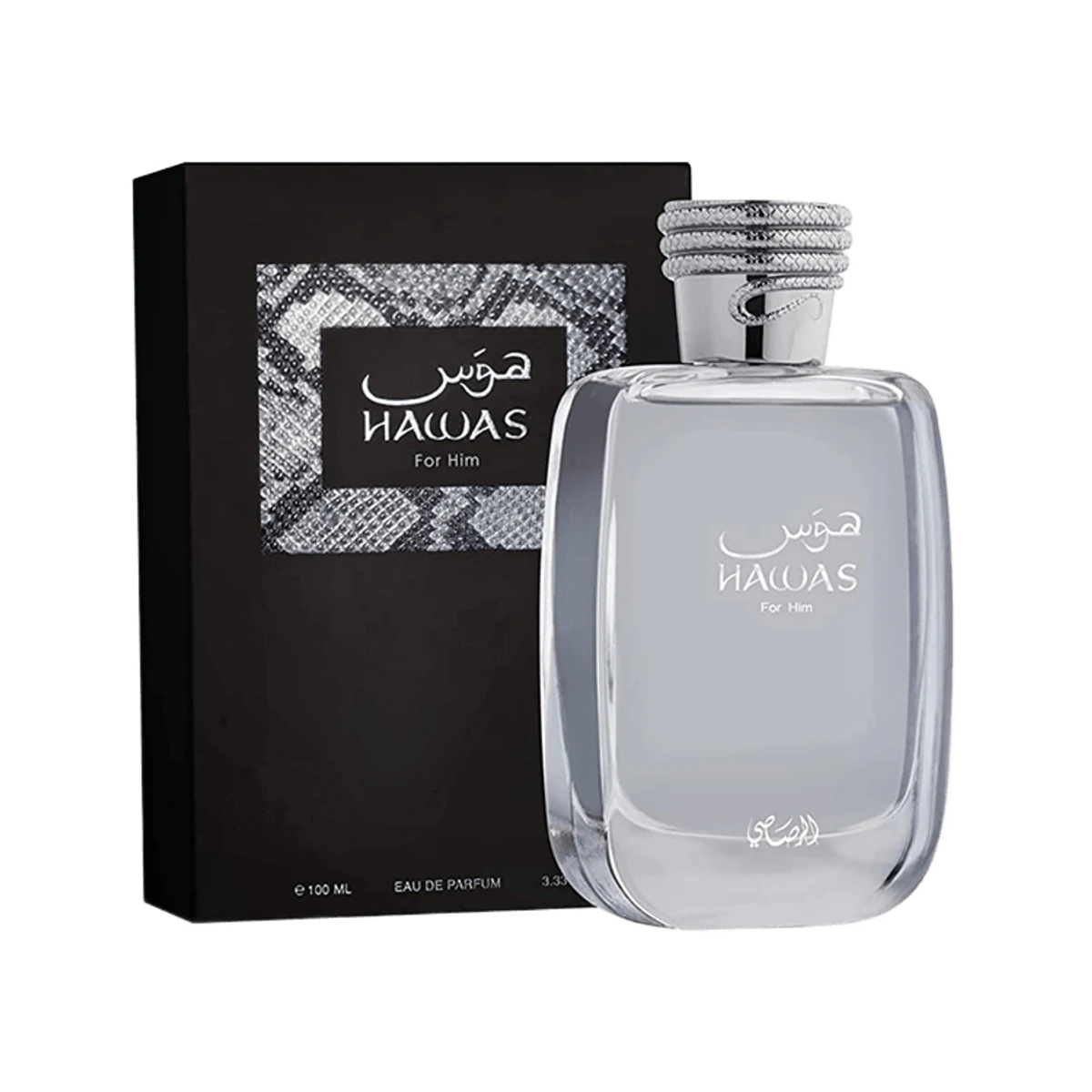
Rasasi Hawas and Lattafa Asad sit on opposite ends of the modern Arabian fragrance spectrum — one aquatic, one sweet-spicy — but they are two of the most cross-shopped fragrances by Indian buyers building their first serious collection. Should you go fresh and versatile, or sweet and statement? Let us break it all down.
Side-by-Side Comparison
| Feature | Rasasi Hawas | Lattafa Asad |
|---|---|---|
| Top Notes | Bergamot, Green Apple, Pineapple | Bergamot, Lavender, Pink Pepper |
| Heart Notes | Marine Accord, Cinnamon, Jasmine | Sage, Ambroxan, Geranium |
| Base Notes | Ambergris, Musk, Patchouli, Woody | Cedar, Ambergris, White Musk, Vanilla |
| Concentration | Eau de Parfum | Eau de Parfum |
| Volume | 100ml | 100ml |
| Longevity | 8-10 hours | 8-10 hours |
| Sillage | Strong | Strong |
| Best Season | Spring, Summer, Monsoon | Year-Round, Cool Evenings |
| Vibe | Aquatic, Confident, Versatile | Sweet, Spicy, Modern |
Scent Comparison
Rasasi Hawas
Rasasi Hawas opens with a confident, juicy blend of bergamot, green apple, and pineapple. The pineapple is what gives Hawas its character — sweet, tropical, and immediately attention-grabbing without ever tipping into childishness. This is an opening designed to make people turn their heads in a coastal evening crowd.
The heart introduces a marine accord tempered by a surprising touch of cinnamon and jasmine, which adds warmth and complexity that most aquatic fragrances entirely lack. The cinnamon is subtle — it never reads as “spicy” — but it gives Hawas a polished depth that elevates it above the typical fresh-aquatic crowd.
The base of ambergris, musk, patchouli, and a generic woody accord gives Hawas impressive staying power. This is not a light, fleeting aquatic — it has substance, longevity, and the kind of base notes you usually find in luxury marine fragrances costing five times this price. The drydown lingers as a clean, slightly sweet skin scent that can carry you from morning office to evening dinner.
Lattafa Asad
Lattafa Asad opens completely differently — bright bergamot, dry lavender, and a punch of pink pepper that makes the opening feel sharp and modern. The opening is bold and immediately recognisable — a polished, contemporary sweet-spicy accord.
The heart settles into ambroxan-driven warmth balanced by sage and geranium. There is a clean, almost soapy quality here that makes Asad feel polished rather than aggressive. The pink pepper persists throughout, giving Asad its signature spicy-sweet pulse that triggers compliments without effort.
The base is where Asad earns its reputation as a compliment magnet. Cedar, ambergris, and a smooth vanilla-musk drydown create a creamy, lingering finish that hits a deeply commercial sweet spot. The dry-down is the kind that makes strangers lean in to ask what you are wearing — modern, smooth, and immediately attractive.
Think of it this way: if Hawas is a confident afternoon at a beachside café, Asad is a polished evening at a rooftop bar.
Performance Comparison
Both fragrances are in roughly the same performance tier. Hawas typically gives you 8-10 hours of solid wear with strong projection for the first 3-4 hours. The sillage is impressive for an aquatic — it carries across rooms in a way that most marine fragrances simply cannot manage.
Asad delivers very similar 8-10 hour wear with strong projection in the same window. The character of the projection is different though — Asad’s sillage is sweeter and warmer, the kind that draws specific compliments. Hawas’s sillage is fresher and cleaner, the kind that creates an overall impression of polish.
Both perform exceptionally for the price tier, with Hawas slightly edging out for longer-term wear (the patchouli base is sticky in the best way) and Asad slightly edging out for first-impression impact (the sweet-spicy opening is a head-turner).
India Seasonal Suitability
This is where the two diverge most clearly for Indian buyers — and probably the deciding factor for most.
Rasasi Hawas is a three-season champion in India. Spring, summer, and monsoon are its absolute prime — March through October across most of the country. Mumbai humidity, Bangalore pleasant weather, Kolkata summer stickiness, Chennai coastal warmth — Hawas handles all of them with composure. The cinnamon in the heart actually helps it project in air-conditioned offices, making it excellent for daily professional wear.
In peak winter, Hawas is still wearable, particularly for daytime, but it does not deliver the cosy warmth that the season often calls for.
Lattafa Asad is at its best in cool weather and air-conditioned environments. October through March is its sweet spot across most of India — Delhi winters, Bangalore evenings, Pune monsoon nights, Lucknow weddings. The sweetness and warmth feel at home below 30 degrees.
In peak Indian summer (April-July), Asad can become heavy. The vanilla-musk base amplifies in heat and the pink pepper opening loses some of its sharpness. Save it for evenings, indoor events, and air-conditioned environments during the warmer months.
For coastal cities like Mumbai, Chennai, and Goa, Hawas is the obvious year-round daily driver while Asad gets reserved for cool evenings out. For North Indian cities with sharper seasons, Asad shines from October through March while Hawas covers the warmer half of the year and the office year-round.
Versatility vs. Statement
Here is the cleanest way to think about this comparison:
Hawas is versatile. It works in almost every Indian context — office, weekend, casual, formal, summer, monsoon, indoors, outdoors. It is the fragrance you reach for when you want to smell good without thinking about whether the occasion suits it.
Asad is a statement. It works best when you want to be noticed, complimented, remembered. It is less context-flexible than Hawas, but in the contexts where it shines, it absolutely shines.
If you wear fragrance every day across a wide variety of situations, Hawas wins. If you wear fragrance specifically for evenings, weekends, dates, and social events, Asad wins.
Value for Money
Both come in 100ml EDP bottles at very similar price points. Hawas offers exceptional value as a year-round daily driver — its versatility means you get more total wears per year, which lowers the cost-per-wear dramatically. Asad offers exceptional value as a modern compliment-magnet — its sillage and crowd-pleasing profile generate more verbal feedback per spray than almost any fragrance in this category.
If you are pricing for cost-per-wear, Hawas wins because of versatility. If you are pricing for cost-per-compliment, Asad wins because of pure attention-getting power.
Verdict: Which Should You Buy?
Choose Rasasi Hawas if:
- You want a versatile three-season aquatic that handles Indian heat
- You live in a coastal or hot-humid Indian city
- You need a single fragrance that covers office, casual, and evening
- You prefer fresh-marine profiles over sweet-spicy ones
- You are buying your first serious Arabian fragrance and want maximum wearability
Choose Lattafa Asad if:
- You want a modern sweet-spicy compliment-magnet
- You enjoy on-trend, crowd-pleasing fresh-spicy profiles
- You are buying for evening wear, dinners, dates, and weekends
- You live in cooler North India or rely on air-conditioned spaces
- You already own a daytime aquatic and want a complementary evening option
The Smart Move
If you can only buy one and you live in a coastal or perpetually warm Indian city, choose Hawas — you will simply wear it more often. If you can only buy one and you live in cool North India or focus on evening wear, choose Asad.
If you can stretch to both, the combination is one of the most complete masculine wardrobes the Arabian fragrance space offers — fresh and versatile for daytime, sweet and statement for evening. They almost never compete with each other for the same occasion, which is the mark of a truly balanced fragrance pair.
Either way, you are buying into two of the most respected names in Arabian fragrance — and two of the strongest examples of why Indian buyers have made this category a cultural force.
Shop the Comparison
| Fragrance | Vibe | Best For | Buy |
|---|---|---|---|
| Rasasi Hawas | Aquatic, versatile, three-season | Daily wear, hot weather, year-round | Shop Hawas → |
| Lattafa Asad | Sweet-spicy, modern | Evenings, dates, cool weather, compliments | Shop Asad → |